Fast pathway: optics and focusing
Glucose swings can temporarily change how the lens bends light and how the focusing system behaves. The result is fluctuating blur that can shift over days.
Two timelines explain most confusion: short-term blur from focusing shifts versus long-term retina risk from vascular injury. This guide separates them and shows what actions matter on each timeline.
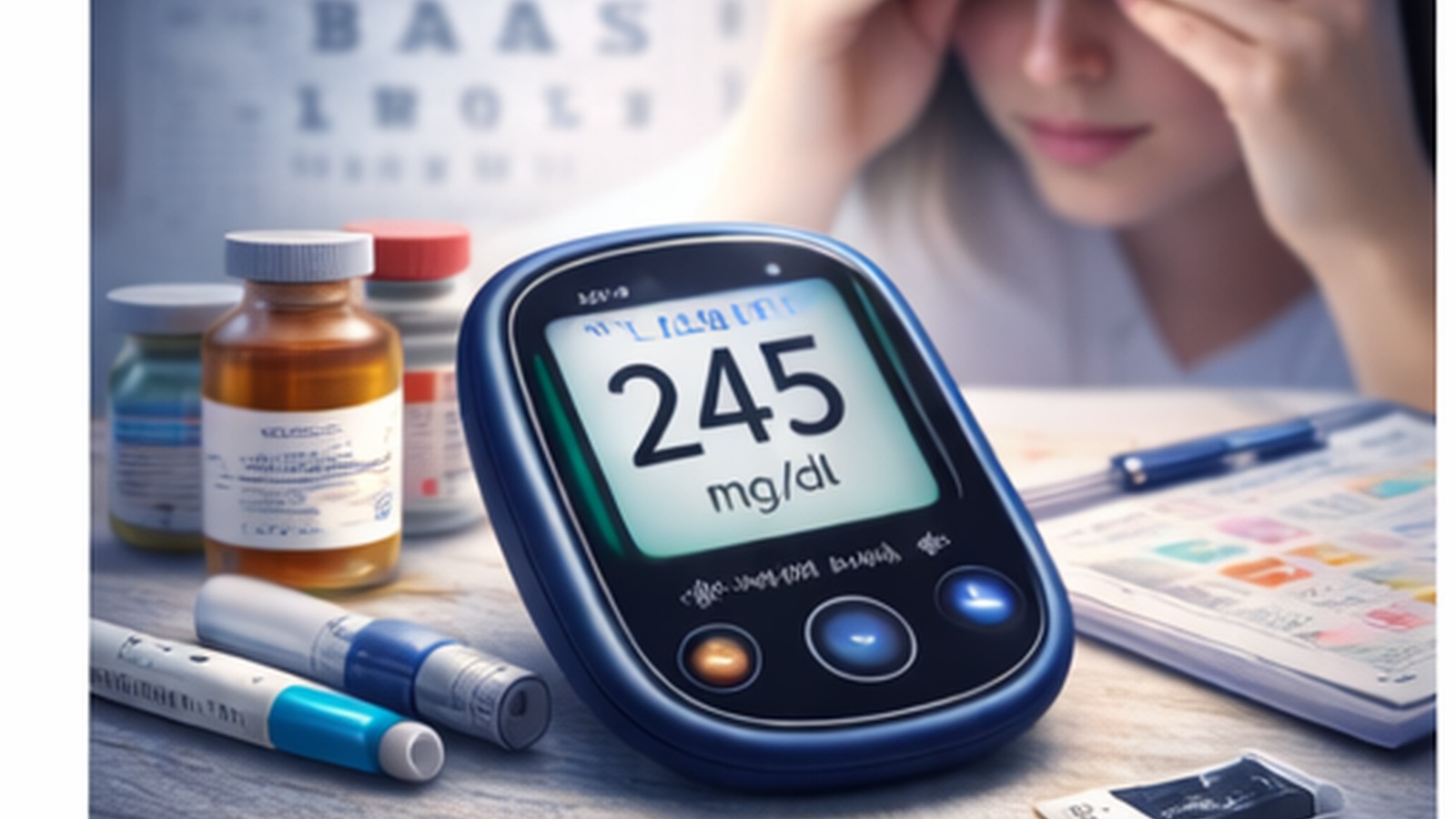
Because the eye is both an optical device and a vascular organ.
People often lump “diabetes eye problems” into one bucket. In reality, blood sugar influences vision through at least two distinct pathways:
Glucose swings can temporarily change how the lens bends light and how the focusing system behaves. The result is fluctuating blur that can shift over days.
Chronic elevation increases risk of retinal vascular damage (diabetic retinopathy) and macular swelling. This is often silent early, which is why screening and follow-up matter.
The fast pathway can be annoying and dramatic but reversible. The slow pathway can be subtle but high-stakes. Mixing them leads to bad decisions.
The lens and tear film are “front-of-eye optics” that notice metabolic shifts.
The eye’s focusing system is sensitive. When glucose is high or changing quickly, the optical system can drift. Many people notice that their vision becomes unpredictably blurry, that their prescription feels “wrong,” or that near and distance clarity swap.
A practical way to think about this is: your eye has a physical lens and an optical surface (the tear film). Both can influence clarity. Glucose swings can influence hydration balance and metabolism, and that can contribute to temporary refractive shifts. Separately, screens and dry air can destabilize the tear film and create blur that improves with blinking.
If you are having rapid glucose changes, tell your eye clinic. If you’re considering new glasses, ask whether it’s better to wait until sugar is stable so the prescription you buy matches your “steady state.”
Where the biggest preventable vision loss often lives.
The retina is metabolically demanding tissue with a delicate microvascular network. Over time, elevated glucose can weaken vessel walls and disrupt blood-retina barriers. Early changes may not distort vision at all, which is exactly why screening exists.
Two core concepts matter:
Think “vessels under stress.” Over time you can see microaneurysms, small hemorrhages, and other changes that indicate injury. Late stages can involve fragile new vessel growth and bleeding.
Leakage can cause fluid buildup in the macula (your detail vision area). This can blur or distort vision and is one reason modern retina care uses OCT imaging and injections in selected cases.
Central vision can remain good while risk increases. The right question is whether the retina is stable and what your follow-up interval should be.
If you want the plain-language treatment side, see Retina injections in plain language.
Not “checking a box” — catching change early enough to matter.
Eye screening in diabetes is about identifying risk and preventing the first irreversible event: macular swelling that lingers, bleeding that scars, or traction that damages the retina. Most modern clinics use a combination of dilated exam, retinal photos, and OCT when indicated.
Ask for copies of retinal photos and any OCT reports. Trend data often matters more than one-time numbers. See Care Guide: records.
Stable means the retina and macula look consistent over time. It doesn’t mean risk is gone. It means the plan is working and monitoring is appropriately timed.
A decision tree that avoids both panic and complacency.
Fluctuating blur during glucose swings is often non-urgent — but sudden one-eye changes, a curtain, new flashes/floaters, or significant pain should be treated as urgent.
Common questions that deserve real answers.
No. Short-term blur can be optical/focusing shifts or tear film instability. Retinopathy is often silent early and is detected through exam/imaging rather than symptoms alone.
Often yes, if changes are rapid. Ask your clinician whether you’re near a “stable baseline” before finalizing a prescription.
OCT imaging is commonly used to assess macular structure and swelling. Your clinic decides based on symptoms and exam findings.